
You probably hear all the time that relationships with caring adults are important for children, but why is that? Research on children’s development shows that having at least one caring adult in their life makes it more likely that a child will flourish and grow into a productive adult. But not all children have this type of relationship with their parents, and even if they do, they can still benefit from additional strong adult relationships in their lives. These relationships can be with their coaches, teachers, religious leaders, or even their volunteers.
At Vecinos Unidos, our students are behind their peers in school, and our volunteers play a vital role in giving them additional one-on-one academic support to help them catch up. But students need more than just academic support to succeed in school and beyond; they also need encouragement and help building their confidence. That’s why just as importantly as providing our students academic support, our volunteers are a chance for our students to have a caring adult mentor.
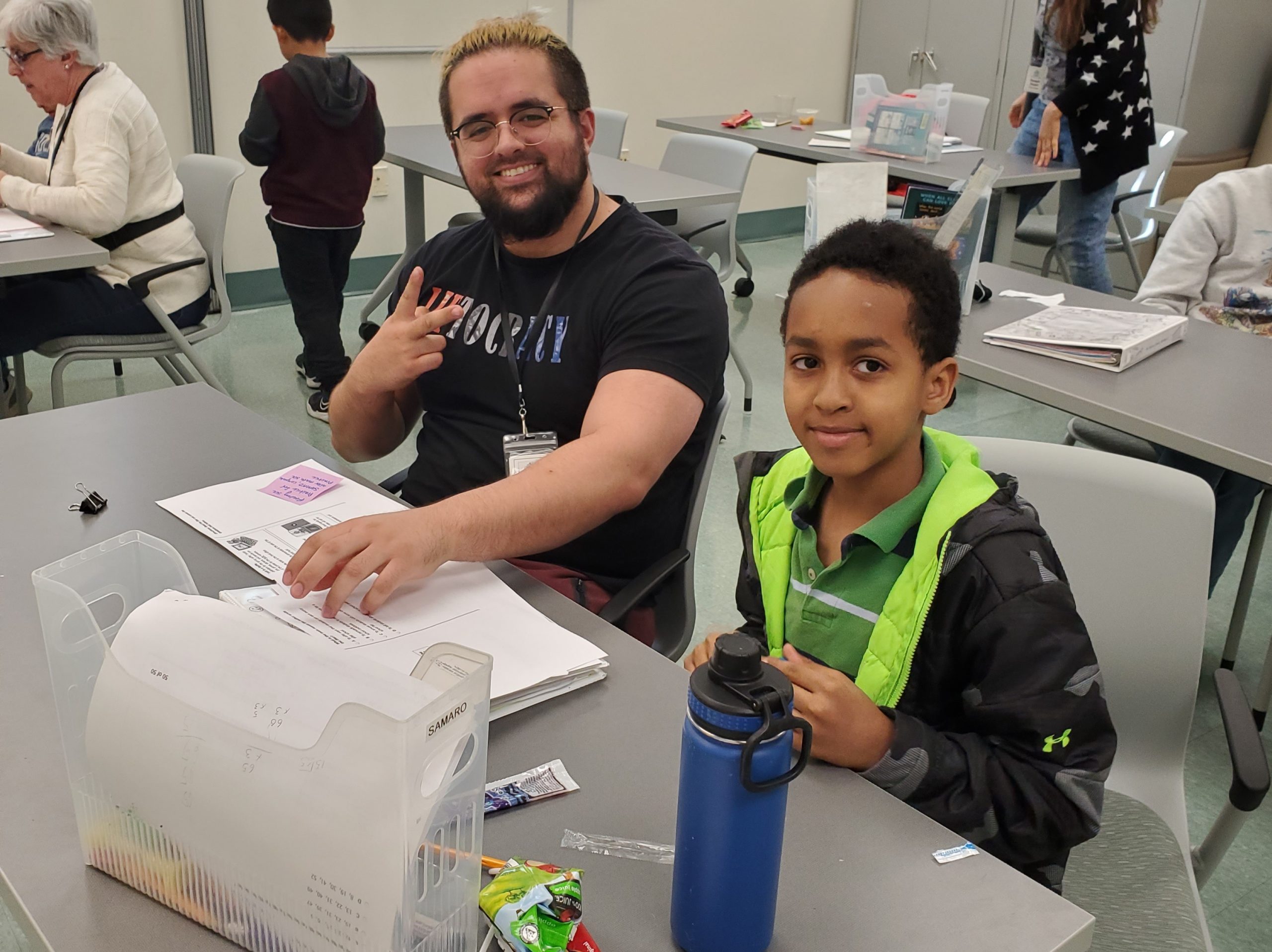
Behavioral Impacts of Adult Mentors
Research shows that children who have a mentor-like relationship outside of the home, whether that relationship is formal or informal, have less behavior problems. This includes externalized behavioral problems, like bullying, and internalized behavioral problems, like depression. These children are also more likely to finish tasks they start, be able to remain calm during challenges, be interested in learning new things, and be engaged in school. Similarly, these benefits extend outside of school, making these children more likely to volunteer in the community, be physically active, and participate in activities outside of school. Mentor-like relationships outside of the home can even strengthen a child’s relationship with their parents, with these children being more likely to talk to their parents about things that “really matter”.
It’s impossible to overstate the importance of these relationships, and you don’t need to go out and start coaching students on a career path or anything like that to help them. The benefit of these relationships for children comes from having a consistent adult in their life that they know cares about them. That’s why the most important thing that Vecinos Unidos volunteers do for our students is show up.
Why Is This Important for VU Students?
According to a survey of parents, about 9 in 10 children in the U.S. have a mentor-like relationship outside of the home. However, while there weren’t really differences in the likelihood of children having these mentor-like relationships by gender or age, there were some groups of children who were less likely to have these beneficial relationships. By race, 96% of white children had these mentor-like relationships, compared with 89% of black children and 73% of Hispanic children. This percentage decreased to 58% for Hispanic students that come from homes where English is not the primary language spoken, while it increased to 88% for Hispanic children that come from homes where English is the primary language spoken.
Looking at wealth, 82% of children who come from less affluent families were 13% less likely to have these mentor-like relationships outside of their home compared to children who come from more affluent families. A difference was also seen based on the mother’s education, with children with mothers that had more than a high school education being 26% more likely to have these mentor-like relationships, as opposed to children whose mothers had only a high school education or less. Similarly, 90% of children living with two married parents had these mentor-like relationships, while 75% of children living with two cohabitating parents had these relationships. Children living with single mothers were actually similar to their peers living with two married parents, with 87% of these children having mentor-like relationships.
As you can see, there are a lot of factors that make a student more or less likely to have these mentor-like relationships outside of the home. Many of the students at Vecinos Unidos fit into multiple categories that are less likely to have these important relationships. That’s why our volunteers are so important. Each volunteer showing up every week gives our students an adult in their life outside of the home that cares for them that they might not have otherwise.
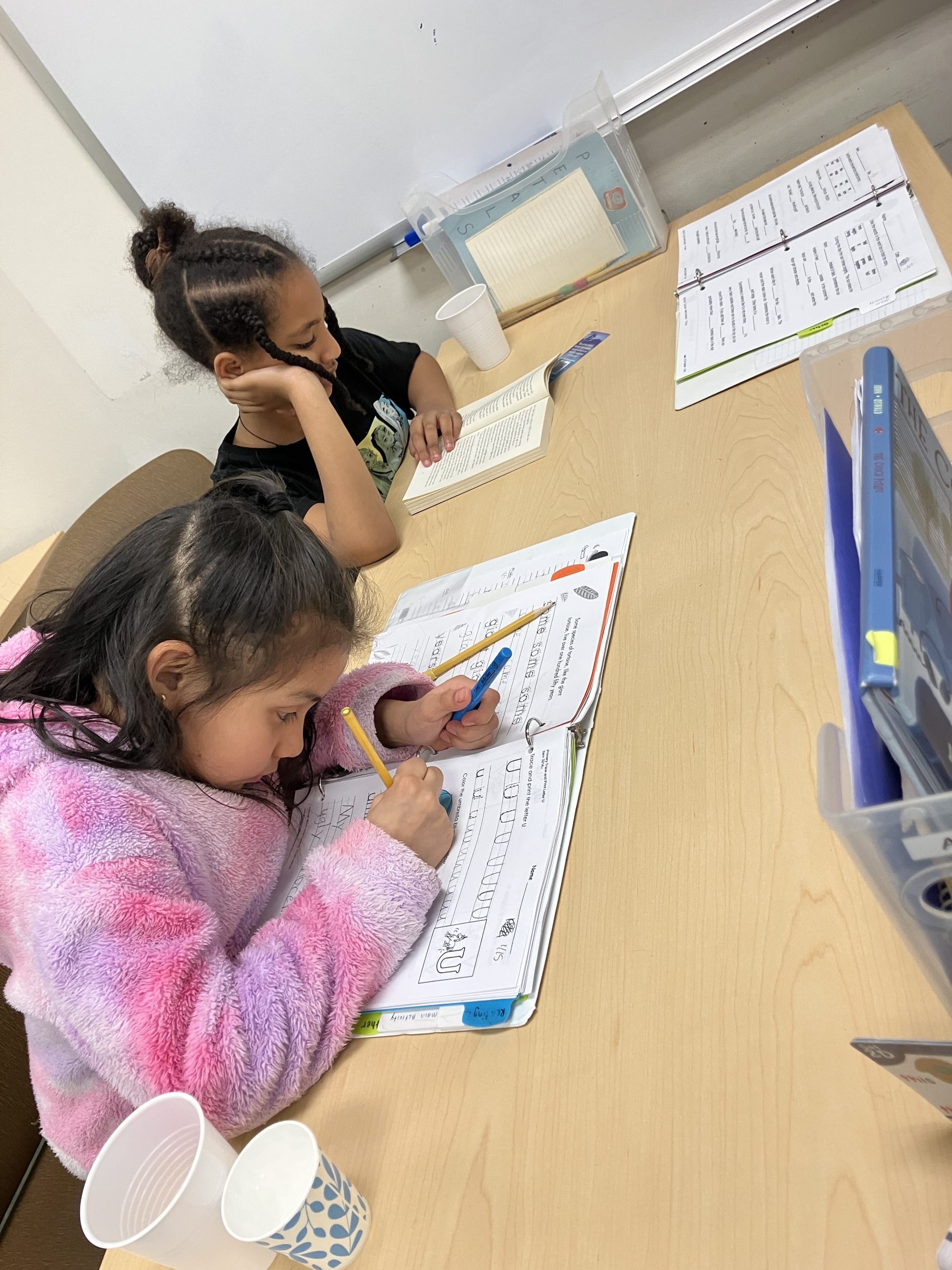
The Impacts We See At VU
When you’re working with students who are behind their grade level, it’s easy to feel like you’re not having an impact, especially when you may not work with the same student every week. However, we see time and time again that the students at Vecinos Unidos are improving. Out of 13 students, 5 saw improvements in their Math grades in Quarter 2 this year compared to Quarter 1, and 6 out of 13 students have a Math grade average of 3 or 4 out of 4. For Language Arts, 8 out of 13 students saw improvements in their grades in Quarter 2 compared to Quarter 1, and 2 out of 13 students have a Language Arts grade average of 3 or 4 out of 4. This tells us that while our students are behind and still have work to do, their grades are improving and the relationships they have with our volunteers are making a difference.
While it is important to look at improvements across our program as a whole, it is also important to celebrate individual student successes. There was one third grade student who has blown us all away with his improvements. This student improved his Math grade average by 15% and his Language Arts grade average by 25%! This huge win was made possible only with this student’s hard work and the relationships he’s built with the volunteers at Vecinos Unidos who show up every week to help and encourage him.

While caring and nurturing parents are important for children to blossom, it is just as important for them to have caring mentor-like relationships with adults outside of the home. The single biggest thing you can do to make a difference in a child’s life is to be one of those mentors. At Vecinos Unidos, our volunteers are showing up to be these adults for children who would be the least likely to have them otherwise.
Note: All statistics not specific to Vecinos Unidos were found in the government report found here: https://educate.iowa.gov/media/3742/download?inline